4: Italy – 10 Greatest Horror Movie Nations on Earth
Welcome to Ranking Horror. We are continuing our feature on The 10 Greatest Horror Nations on Earth. Today, we are checking out number 4 on the list – Italy.
Table of Contents
This ranking measures horror nations by sustained influence, modern relevance, and impact above expectation, not just historical legacy.
We closed out the first half of this list with South Korea, before opening the top 5 with Spain. Today, we are continuing with another great horror nation in the form of Italy. Now, I am expecting this entry to raise a few eyebrows. After all, horror fans rate the Giallo era extremely favourably when it comes to shifts in the horror genre as a whole. With this in mind, I feel as though it is important to point a few things out.
This list, obviously, takes into account a country’s historical significance when it comes to the genre. With that being said, I also have to consider contemporary output. As in, the movies that are being released to this day. That’s where Italy falls majorly short. Read on and I will explain. Let’s take a look.
- Consistency: How consistent has the country been in putting out decent horror movies.
- Historical Impact: How impactful has the country’s horror output been on the industry itself.
- Current Impact: How impactful are the country’s modern releases on the industry
- Impact Above Expected: How impactful has the country been considering their population.
4: Italy – A Now Dormant Horror Giant
I know, I can already hear the teeth of Redditors everywhere gnashing away while muttering the word “Giallo” under their breaths… I get it and I agree, Italy’s impact on the horror industry has been huge and it is one of the most important horror nations on earth – hence its top 5 spot.
This is particularly true when you consider modern day slashers and movies like MaXXXine (2024). Hell, you could even argue that just their culture and the proliferation of Catholicism has added immense amounts to the horror industry.
With this in mind, how did it end up outside of the top 3? The reality is, Italy has fallen dormant in the horror world and that plays a big part in its ranking. Let’s start by having a look at their horror history, as a whole.
Italy’s Ground-breaking, Boundary Pushing, And Controversial Horror History
There might not be a more significant and influential country on earth, outside of the USA, when it comes to horror pre-1990s. Italy shaped the genre through a combination of visionary directors keen to push boundaries, movies with distinctly stylised visuals, and an approach to subjects like violence and psychology that nobody had seen before.
It all started rather quietly, though and this is the first factor that keeps them out of the top 3. The pre-1950s were marked by Italy only occasionally dipping its toes into the world of horror. These efforts came in the form of Gothic tales derived from literature and were never outright “horror”.
Censorship, at the time, never allowed horror to truly flourish so filmmakers lent their talents to comedies, dramas, and historical epics.
Much like the Hammer Horror era that was about to start in the UK, during the mid 1950s, and the Fantaterror era coming a decade later in Spain. Italy was about to experience its own wave of Gothic horror sparked by legendary cinematographer, turned director Mario Bava and inspired by Britain proving that the genre was still financially viable.
Italy’s Late 1950s Gothic Horror Wave
Bava’s masterful use of colours, lighting, and shadow helped forge a Gothic horror wave that was distinctly Italian. A lush, vibrant, palette weaved pictures that were almost dream-like and a preference towards atmosphere and ambiguity over scary visuals gave these films an otherworldly vibe that was truly unmistakable.
While drawing influence from Britain’s Hammer Horror and Universal’s monster movies. Italy’s Gothic horror films were more nihilistic and explored concepts of existential dread, along with the morally ambiguous nature of the characters involved. This was horror with an edge and it proved to be a hint of the country’s genuinely unique way of approaching genre films.
Ricardo Freda lead the way, with some uncredited assistance by Mario Bava, with the seminal Italian gothic horror film I Vampiri (The Devil’s Command, 1957). It was Bava’s 1960 film Black Sunday (La Maschera del Demonio, 1960) that really put Italy on the horror map.
Black Sunday proved to be a shocking film for more than just its visuals and atmosphere. With the movie featuring a scene that was uncharacteristically violent for horror of the day.
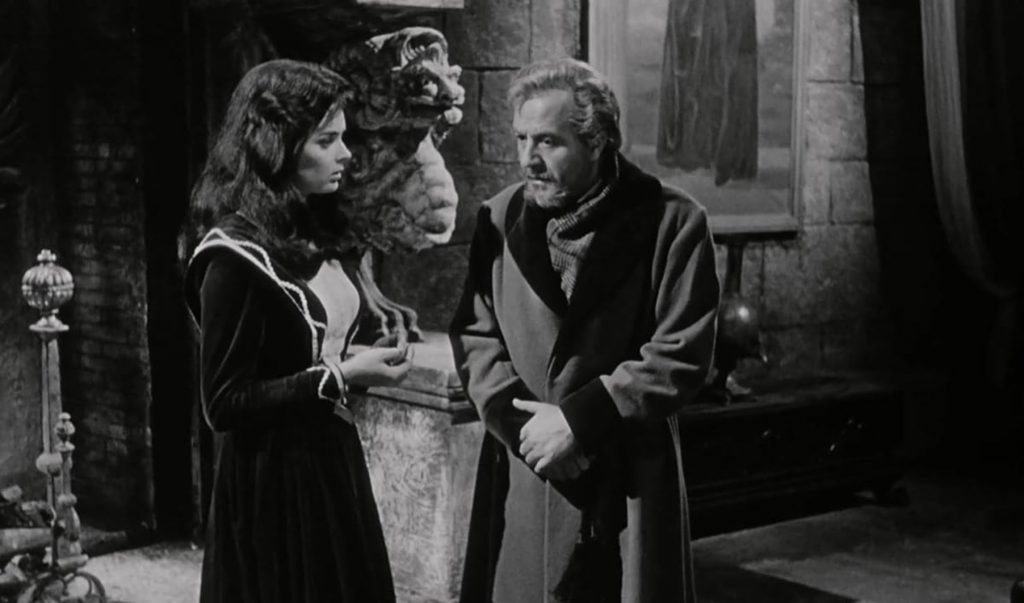
Freda would return with the taboo-breaking The Horrible Dr. Hichcock (L’Orribile Segreto del Dr. Hichcock, 1962) and, in the process, would bring along Black Sunday star Barbara Steele. The British actress had gone on to find success in America with The Pit and the Pendulum (1961) and had become something of a scream queen.
Black Sabbath (I Tre Volti della Paura, 1963) featured the legendary British horror icon Boris Karloff and demonstrated Bava’s versatility through it’s anthology presentation. Italy’s gothic horror movies were really beginning to push boundaries, featuring graphic violence and sexuality that just wasn’t common at the time. Perhaps a hint as to how Italian horror was about to change.
An Italian Horror Golden Era – Giallo
Italy truly shook the horror world in the 1960s in a way that would still resonate to this very day. The Giallo (Italian for “yellow” which referred to the colour of the covers of cheap mystery novels) genre had arrived and it was about to put an abrupt end to Italy’s love of gothic horror.
The Giallo era came off of the back of evolving attitudes in Italian culture. A post-war economic boom greatly impacted the shape of everyday life in Italy. Big houses, urbanisation, and consumerism gave way to increased social anxieties about the changing face of the country. Giallo came along to turn those anxieties into nightmares.
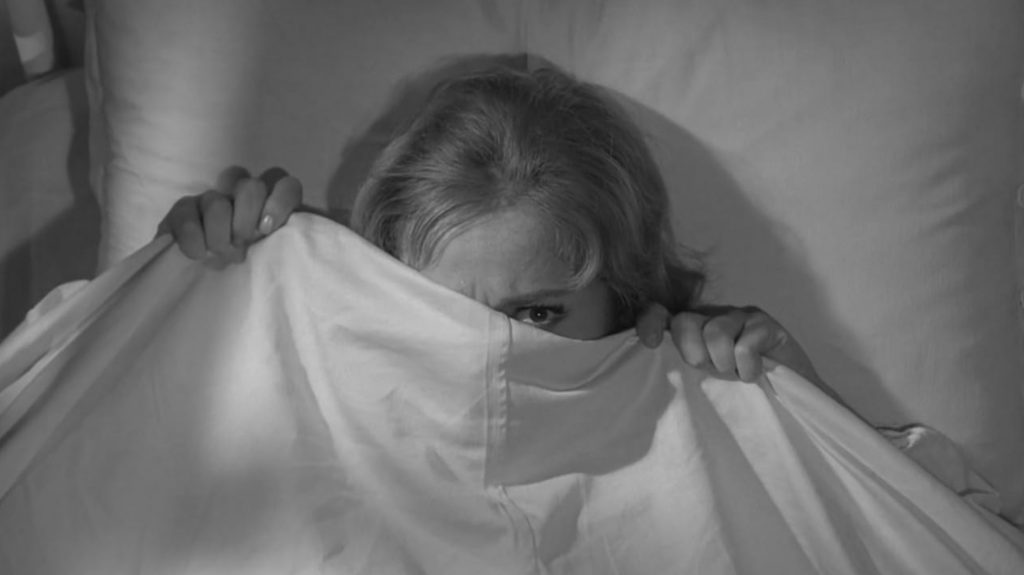
These movies combined highly stylised crime-based mysteries with psychological-horror and some seriously nasty violence to create a genre that felt utterly unique. Giallo horror was visceral, brutal, highly sexed, boundary pushing, and frequently gripping.
Giallo movies also retained the distinctly Italian visual style that made their Gothic horror movies so captivating. Bold colours dominated and a keen focus on aesthetics took centre stage. These were incredibly stylish movies and were instantly recognisable – Some of the most aesthetically beautiful horror movies ever made.
Giallo’s Output Was Incredible
For a style of horror that only really lasted a decade and a half, the sheer volume of output was immense. Many of these titles are still talked about today as among the greatest and most important in horror history.
- The Girl Who Knew Too Much (La ragazza che sapeva troppo, 1963, directed by Mario Bava) – Often regarded as the first giallo, this film follows a tourist in Rome who witnesses a murder and becomes embroiled in a deadly mystery.
- Blood and Black Lace (Sei donne per l’assassino, 1964, directed by Mario Bava) – A killer stalks the models of a fashion house, turning a glamorous setting into a macabre nightmare.
- Don’t Torture a Duckling (Non si sevizia un paperino, 1972, directed by Lucio Fulci) – A journalist investigates the murders of young boys in a rural Italian village, exposing the dark secrets of its residents.
- All the Colors of the Dark (Tutti i colori del buio, 1972, directed by Sergio Martino) – A woman haunted by nightmares is drawn into a terrifying occult conspiracy.
- The Bird with the Crystal Plumage (L’uccello dalle piume di cristallo, 1970, directed by Dario Argento) – A writer witnesses a murder attempt and becomes obsessed with solving the case, putting himself in danger.
- Deep Red (Profondo Rosso, 1975, directed by Dario Argento) – A pianist and a journalist team up to solve a series of gruesome murders, uncovering a disturbing web of secrets.
- The House with Laughing Windows (La casa dalle finestre che ridono, 1976, directed by Pupi Avati) – A restorer uncovering a disturbing fresco in a small Italian village is drawn into a sinister and deadly conspiracy.
- The Psychic (Sette note in nero, 1977, directed by Lucio Fulci) – A woman’s psychic visions lead her to uncover a murder in her husband’s past, putting her own life at risk.
- Tenebrae (Tenebre, 1982, directed by Dario Argento) – A mystery author in Rome becomes entangled in a string of murders mimicking his latest novel.
I could go on and on as there are so many titles that are either considered Giallo movies or adjacent to the genre. While Mario Bava, in essence, gave birth to the Giallo genre, visionary horror directors like Dario Argento, Lucio Fulci, Umberto Lenzi, and Sergio Martino helped to define it.
Whereas Giallo didn’t initially enjoy the same level of worldwide success as Britain’s Hammer Horror era. European countries like Germany, France, and Spain were early adopters of the movement. Giallo’s shocking nature and eroticism aligned perfectly with similar horror, and thriller, movements taking placing in neighbouring countries.
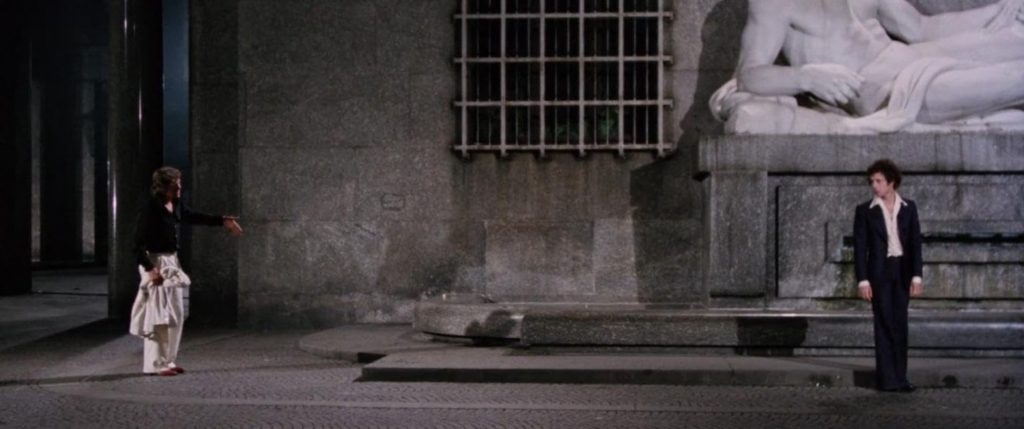
Giallo’s impact in the US and the UK was far more of the “cult” variety. Giallo fit in perfectly with America’s Grindhouse cinema movement and attained a loyal fandom. Though the distinctly European traits and aesthetics didn’t always translate. The shocking advertising posters and raw content frequently did.
An Enduring Horror Legacy
Overtime, the legend of Giallo only grew and as accessibility increased, so did its international fandom. Giallo’s impact is still felt to this day, with the recent British horror movie Last Night in Soho (2021) and MaXXXine (2024) reminding modern viewers that Giallo can still work in the 2020s.
That’s without mentioning Giallo’s presence on streaming services and horror specific television stations. You could probably throw on any free-to-air horror movie channel right now and find at least a few Giallo movies showing every week.
Coincidentally enough, Giallo would go on to inspire the genre that would eventually lead to its decline in the form of American slashers.
Directors from the USA would simplify the format, tone down the aesthetic, minimise the mystery element, and condense the formula down in a way that viewers from the US found a lot more digestible. Slashers would go onto dominate worldwide while Giallo quietly faded away.
A Shift in Styles
Gialli’s influence shifted as the genre began to fade. Though it would see sporadic entries, Gialli’s contributions to horror cinema came in the form of inspiration rather than movies directly attributable to the genre.
The first two films in Dario Argento’s “Three Mothers” trilogy, Suspiria (1977) and Inferno (1980), represented a step away from Italy’s Giallo past, while still retaining some of the qualities that made the era so special.
Gialli’s psychological horror murder mysteries were pushed aside in favour of supernatural themes. Suspiria was a tale of witches and ancient evil that took Argento’s already refined cinematic visual brilliance to whole new hypnotic levels.
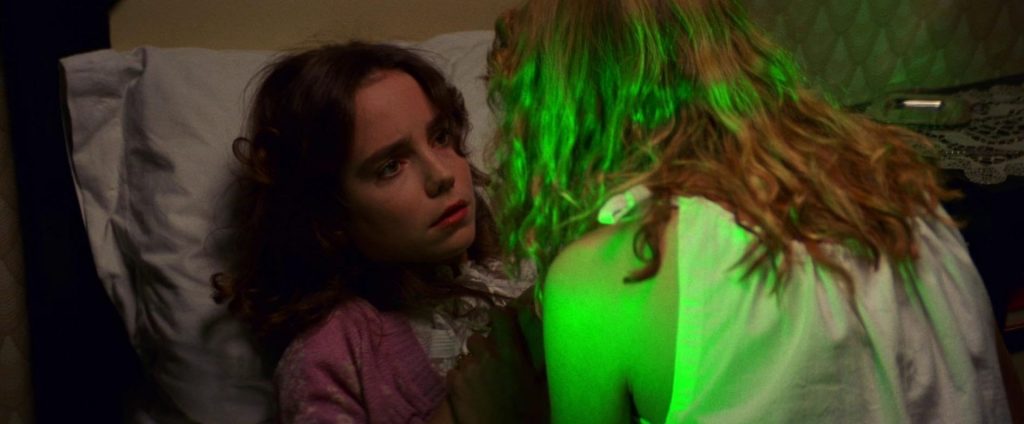
The already lush aesthetics of Giallo movies were infused with dramatic, hyper-saturated, reds, greens, and blues in a vibrant palette that afforded the picture an unsettling atmosphere. Even if Giallo‘s time had come to an end, Argento’s most certainly hadn’t. Suspiria proved that he wasn’t just a master of a faded genre, he was one of the greatest horror directors on earth.
Giallo would see sporadic releases in the decade to follow but its years as a dominant force in Italian horror cinema were practically done. Italy was in the midst of experiencing another seismic shift in its horror industry as Giallo declined. This time, towards the ultra graphic nature of exploitation films.
Italy’s Exploitation Horror Movement
Exploitation films were running rampant all over the world in the 70s and 80s and Italy wasn’t about to stand idly by and watch. Viewers who desired an entirely more visceral, realistic, and brutal form of horror were clamouring to spend their money on anything deemed repulsive and shocking.
Cannibal exploitation films lead the way with titles like Cannibal Holocaust, Cannibal Ferox, and Last Cannibal World filling a desire for gritty, realistic cruelty in horror’s less intellectually demanding viewers. These films packed in numerous scenes of violence, aggressive sexuality, gore, brutality, and actual real life animal cruelty. All placed up against a backdrop of dehumanising racist ignorance and a desire to shock.
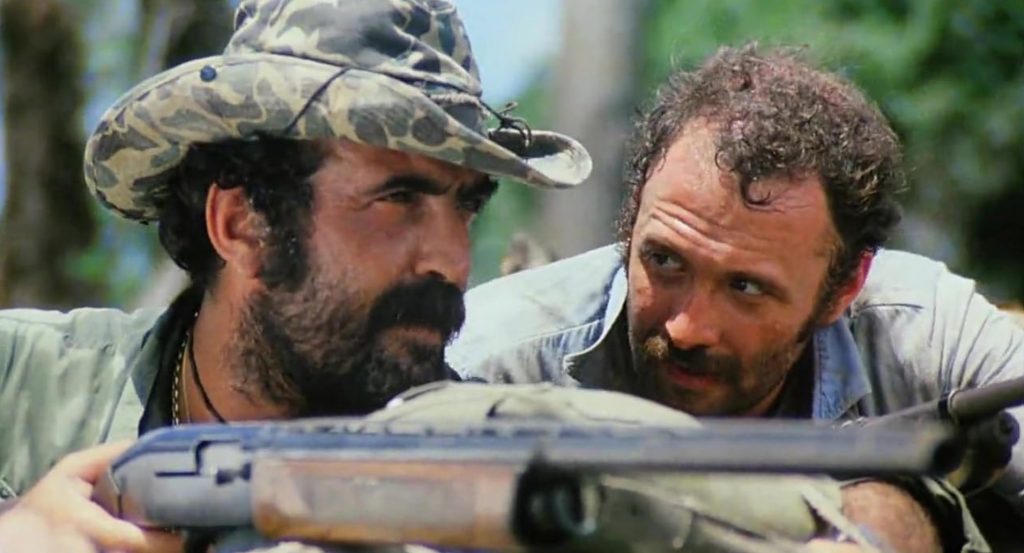
Directors wore censorship, bans, and restricted ratings like badges of honour. Cannibal Holocaust director Ruggero Deodato even found himself in court accused of filming an actual real life snuff movie.
If Giallo aimed to demonstrate the corruption of people who resort to violence and murder. Exploitation revelled in that corruption.
These movies retain cult audiences to this day. Italy expanded on their exploitation cinema with some highly influential zombie movies. Giallo director Lucio Fulci produced some very well regarded z-horrors in the form of Zombie Flesh Eaters (Zombi 2, 1979), City of the Living Dead (Paura nella Città dei Morti Viventi, 1980), and The Beyond (E tu Vivrai nel Terrore! L’Aldilà, 1981).
The End of a Horror Superpower
The 90s saw the demise of one of horror’s greatest nations. Financial incentives, and avenues to co-productions with other countries, dried up. Once great Italian horror directors struggled to adapt to the changing tastes of a younger generation of viewers.
It wasn’t just Italy that was struggling, though. America’s influence on the horror world set off something of a chain reaction around Europe. Blockbuster titles with well known actors were en-vogue and creative European horror movies were now passe.
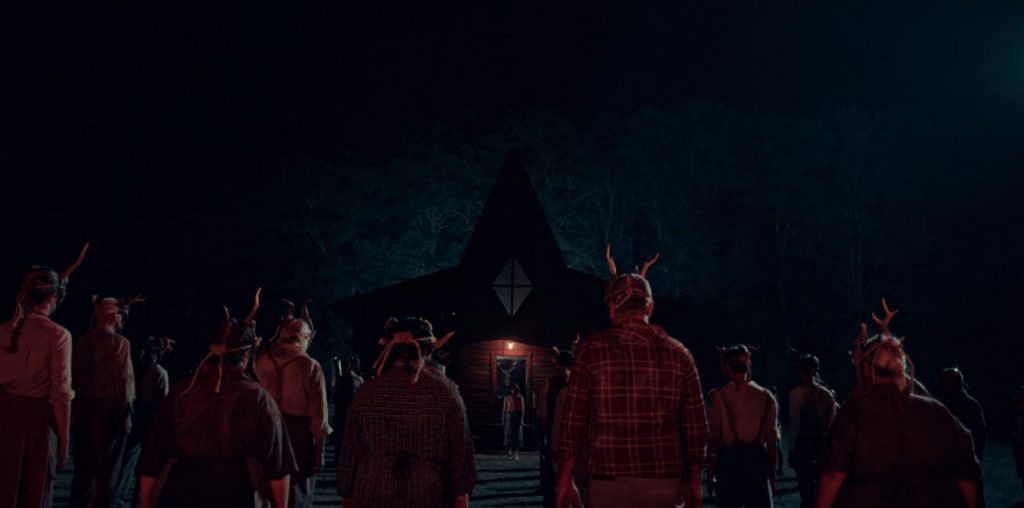
Whereas most of the European horror powerhouses (France, Spain, The UK) would bounce back after the turn of the Millennium, Italy never did. While the influence of Italy’s vibrant gothic horror past and their ground-breaking Giallo era would inspire horror directors for decades to come. Italy would, pretty much, entirely bow out of the horror genre with the exception of sporadic releases here and there.
Netflix production A Classic Horror Story (2021) deserves mention and there are a few indie efforts floating around. I also see Italy appear as a collaborator with other countries on occasion. As it stands, however, Italian filmmakers are far more focused on dramas and comedies than they are on horror.
⚖️ Legacy vs. Pulse
I know, I know. Putting Italy outside the Top 3 feels like I’m asking for a gloved hand to reach out of the shadows and grab my throat. If this list were a Horror Hall of Fame based purely on DNA and historical importance, Italy would be fighting for the #1 spot, no question. Their “blueprint” created the modern genre.
But this isn’t just a history lesson. This is a ranking of nations as functioning horror entities. My criteria (Consistency and Current Impact) are there for a reason. To me, a giant without a heartbeat is just a statue. While the UK and South Korea are still running and evolving, Italy has been standing still for nearly 40 years.
You can’t stay on the podium forever just because you once built the best house on the block. Eventually, you have to do some maintenance – and Italy, sadly, left the building in the late 80s.
Why Isn’t Italy In The Top 3?
The reality of the matter is, Italy’s horror output has been scant for a very long time, and their contemporary significance to the industry has waned. It’s impossible to understate the importance of Giallo. There is no other genre like it on earth and its influence is massive. Just go and watch any Quentin Tarantino, Edgar Wright, or Ti West film to see that.
But where other nations bounced back from lulls, Italy never did.
I have to weigh this entire list on both a contemporary and historical level. Their modern horror output is almost null and their horror history will struggle to make up for that. There are people who are hitting middle age that still weren’t alive when the last Italian horror of genuine significance released.
The countries ahead of Italy on this list were either more globally significant or had a sustained impact on horror up until the present day. The fact that Italy made the top 5 with barely any releases in the last 35 years is noteworthy in itself.
Another thing? Gialli’s most enduring contribution lies not in expanding horror’s mythology, but in redefining the modern thriller’s visual language, narrative subjectivity, and fusion of eroticism, psychology, and investigation.
🕵️♂️ The Giallo Dilemma
Here is the hard truth that might upset the purists: Giallo isn’t just horror – it’s a crime thriller in a masquerade mask. While it birthed the slasher, Giallo’s most lasting impact today isn’t actually felt in the horror genre. It’s felt in the modern thriller.
Think about it. When you watch a movie like John Wick, Malignant, Basic Instinct, or anything by Quentin Tarantino, you see the fingerprints of Mario Bava and Dario Argento everywhere. The hyper-saturated lighting, the fetishisation of weapons, the operatic violence – it’s all there. But it’s being used to make action movies and neo-noirs look “cool,” not to make people check under their beds.
Because Giallo is fundamentally a “whodunnit” built on detective tropes and human motives, its DNA has migrated. It has become the aesthetic backbone of the modern high-fashion thriller. In a list of Greatest Horror Nations, Italy takes a hit because its most famous export has essentially left the building to hang out with the thriller crowd. Gialli contributed virtually nothing to the modern jump scare and supernatural Hollywood horror. No one’s denying Giallo scared the hell out of audiences in the 70s, but its lasting echo is in thrillers, not scream-worthy horror.
- Consistency: Incredibly consistent from the late 50s to the 80s and then virtually nothing.
- Historical Impact: It’s tough to understate just how important the Giallo genre was to modern horror. Very significant Gothic Horror era, as well.
- Current Impact: Giallo’s influence is clearer than ever but more in thrillers than anything, Italy has pretty much abandoned horror.
- Impact Above Expected: A decent population of 58 million but Italy’s worldwide impact is still very impressive.
More Horror Lists You Will Love
- 10 Unique Zombie Horror Movies That Do Things Different- Ranked
- J-Horror Journey: 10 Darker Japanese Horror Masterpieces for the Brave
- 10 Of The Greatest Coming-Of-Age Horror Movies Of All Time
- Beyond the 90s: 10 More of the Greatest J-Horror Movies
- 10 Daylight Horror Movies For When The Sun Can’t Save You – Ranked