2: Japan – 10 Greatest Horror Movie Nations on Earth
Welcome to Ranking Horror – your ultimate destination for ranked horror movie lists and absolutely nothing else. If you’re a fan of listicles and on the lookout for your next big scare, you’re in the right place. We are continuing our feature on The 10 Greatest Horror Nations on Earth. Today, we are checking out number 2 on the list – Japan.
Table of Contents
This ranking measures horror nations by sustained influence, modern relevance, and impact above expectation, not just historical legacy.
This entry might be a little controversial to some but, like Italy, it is weighted heavily on the significance of their global impact above expected.
Much like Italy with their Giallo movies and the long term impact they made on horror, as a whole. Japan’s late 90s J-Horror wave didn’t bow to trend or adapt its language. It defined trend and modified horror language on a worldwide scale. This is a non-English speaking country that had a universal impact that is still resonating today. We might never see this type of horror wave ever again. That’s why it is here at number 2.
- Consistency: How consistent has the country been in putting out decent horror movies.
- Historical Impact: How impactful has the country’s horror output been on the industry itself.
- Current Impact: How impactful are the country’s modern releases on the industry
- Impact Above Expected: How impactful has the country been considering their population.
2: Japan – A Horror Powerhouse
You may think that Japan taking the number 2 place on this list of greatest horror nations is a bit ridiculous. Their historical output pre-1990s was fairly sporadic and their modern output has flagged.
While I can understand that viewpoint and reasoning, it discounts one undeniable fact. J-Horror was a paradigm shifting wave of horror that went global and changed the entire industry forever. Its influence is still everywhere and contemporary horror has much to thank Japan for.
The world has experienced few movements quite as impactful and sustained as J-Horror. While you could make the argument that Giallo, Hammer, and German Expressionism are comparable. Their impact wasn’t as immediate and as global as that of J-Horror.
A Sporadic Yet Significant Horror History
Japan’s horror history was marked by a rather sporadic array of releases pre-1990. The country’s rich history of traditional spooky story telling, known as Kaidan (怪談, Strange Tales), set a foundation for horror related fiction dating back over a millennium. In fact, the first known recorded supernatural stories could be found in the Kojiki (Records of Ancient Matters) which dates back to 712 CE. That’s over 1300 years ago.
This love of ghost stories and the supernatural would carry forward into the country’s traditional theatres like Kabuki and Noh. These stories frequently placed the focus on traditionally Asian themes of vengeful spirits (yūrei) and supernatural beings of Japanese legend known as yōkai. Eventually going on to define the visual aesthetics of these beings that became so recognisable in J-Horror.
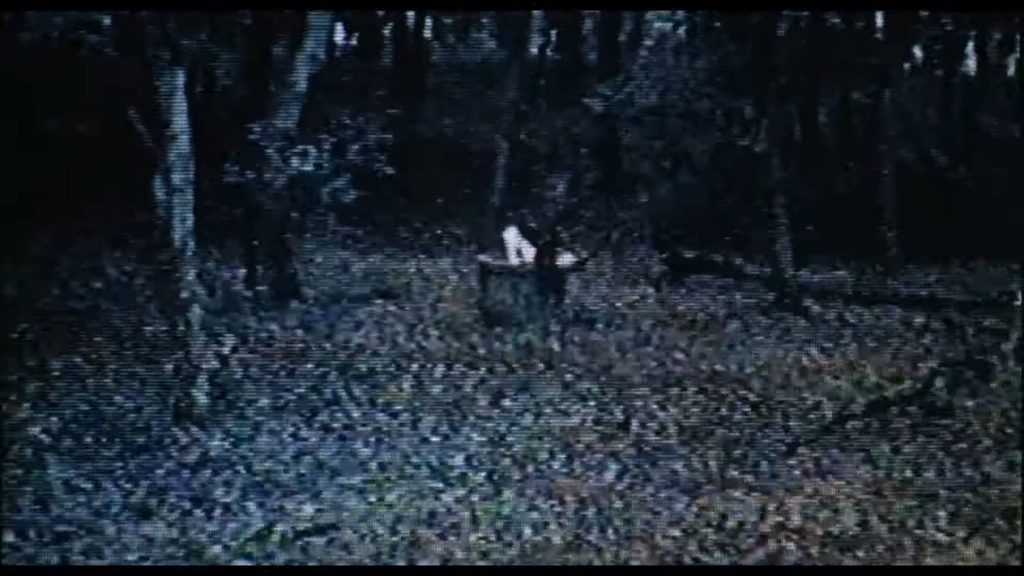
In fact, Japan’s iconic vengeful female spirit (onryō), adorned with long black hair and a white burial kimono, dates all the way back to Kabuki theatre and plays like Yotsuya Kaidan (The Ghost Story of Yotsuya). These influences can still be seen today in all different kinds of media including video games like the Nioh and Silent Hill series.
The 1900s – Early Beginnings
We talked about some of the earliest horror movie making nations in our articles about France and the UK. While the nature of what constituted a “horror movie” was completely undefined back in the late 1800s. Leaving us to appraise what could be classed as “horror” using hindsight and a modern lens.
It could be suggested that France had the first ever horror movie with Le Manoir du Diable in 1896, closely followed by British director George Albert Smith’s supposedly lost film The Haunted Castle, one year later.
If we were to apply the horror definition to those short films, we could rightly apply it to Bake Jizo (Jizo the Spook) and Shinin no sosei (Resurrection of a Corpse), as well, both of which released in 1898. This would make Japan one of the first nations on earth to contribute to the world of horror.
While perhaps not directly attributable to the horror genre, 1926’s silent film tour-de-force A Page of Madness (狂った一頁, Kurutta Ippēji) featured imagery that was both unsettling and disturbing. The film carried forward some of the Kabuki theatre inspired aesthetics that would later be so familiar to the entire world. All while blending them with some truly experimental, Avant-Garde, filmmaking that broke away from traditional narrative driven cinema.
The 50s – Japan’s Horror Cinema Post-War
Many film-making nations were impacted by the second world-war. Filmmakers were suddenly acutely aware of their own mortality and the fragility of life. Whereas this was reflected in many countries by horror keying in on more psychological, existential, and ultimately more human, subjects. In Japan, it gave birth to one of the country’s greatest exports – Kaiju films.
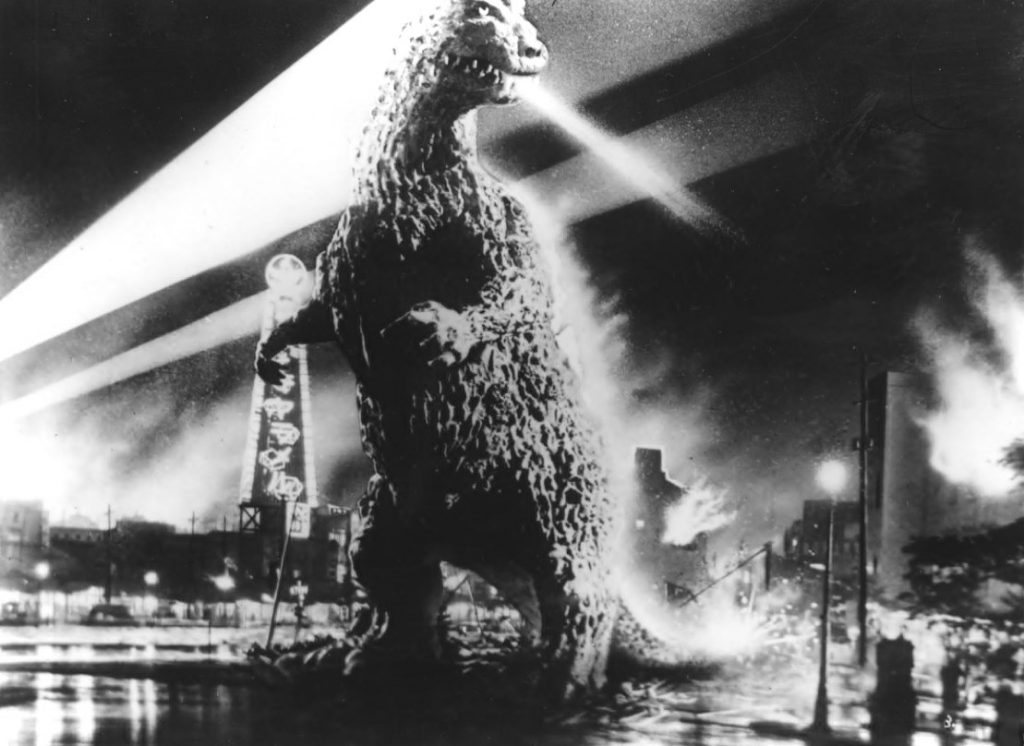
Japan was now living in a world that had experienced two major nuclear attacks. This reality was manifested in the form of Ishirō Honda’s movie Godzilla (Gojira) from 1954. The film’s story of an indestructible creature woken from its slumber by underwater H-Bomb testing reflected the country’s nuclear anxiety. Demonstrating the immense death and destruction that can come as a result of unchecked scientific power.
Toho would go on to be the most prolific of Kaiju content creators making 33 films in the Godzilla franchise alone, as of 2023 and inspiring a worldwide trend of massive creatures crushing cities.
The 50s & 60s – The Return of Kaidan
The 50s and 60s saw Japan return to its Kaidan roots with movies focused on ghost stories and vengeful spirits. This era produced some of the most well regarded horror masterpieces of all time including 1953’s Ugetsu, 1964’s Kwaidan and Onibaba, and 1968’s Kuroneko.
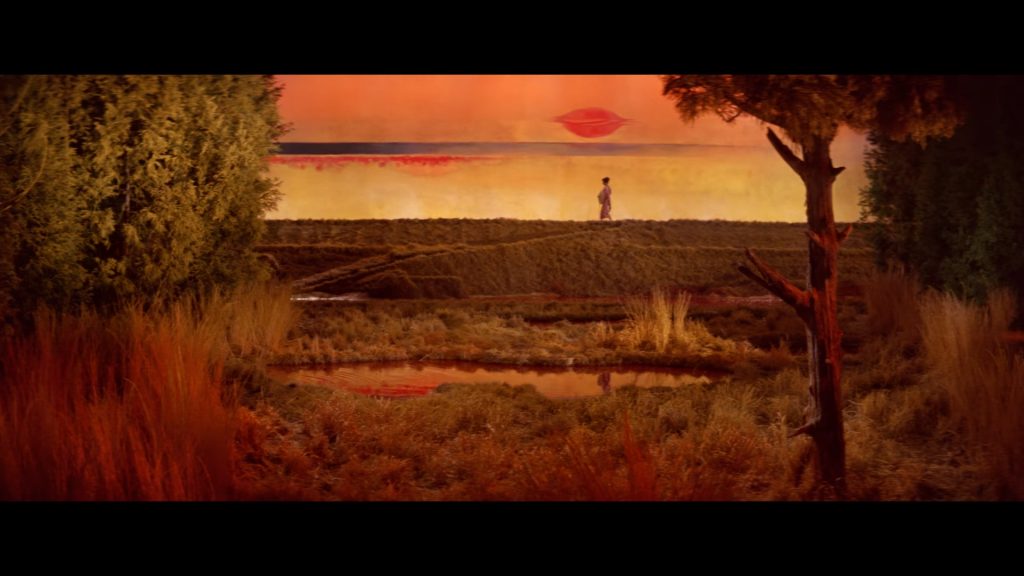
Kwaidan is still, to this day, one of the most visually breath-taking horror movies I have ever watched. The over three hour long anthology brought together an immensely rich colour palette with distinctly Japanese horror storytelling and a preference for atmosphere and dread over jump scares. Sounds familiar?
Kaneto Shindō delved into the darker side of the human psyche in Onibaba (1964) and Kuroneko (1968). A trait shared by Yasuzô Masumura’s Blind Beast (1969). Japan was beginning to experiment with the more troubling aspects of human nature in much the same way as the rest of the world.
The 70s & 80s – A Quiet Period in Japanese Horror
Though the 70s and 80s were a rather quiet period for Japanese horror. We would start to see a more creative and experimental side of the genre. 1977’s House, by Nobuhiko Obayashi, is a surreal and legitimately hilarious, haunted house movie that mixes frequently farcical visuals and scenarios with more traditional horror themes. This zaniness could be seen decades later in Japan’s horror output.
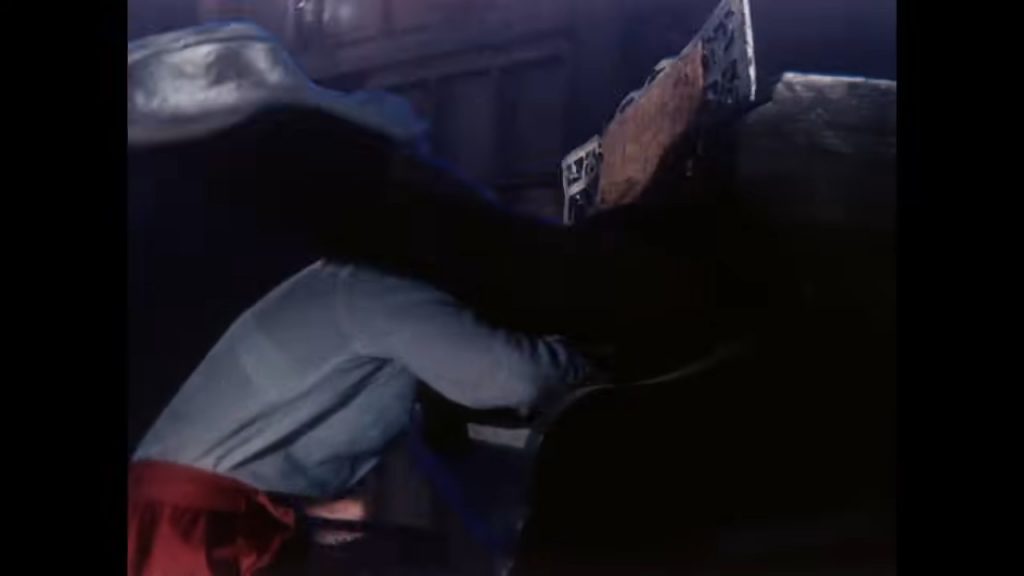
Shinya Tsukamoto’s influential cyber-punk body-horror Tetsuo: The Iron Man (1989) was both a hint of what was about to come and an example of powerful Japanese independent film production. If dusk was falling on Japan’s traditional horror movie industry. The dawn of something altogether more fresh and altogether more ground-breaking was on the horizon.
Visionary Japanese horror filmmakers had already been experimenting with new horror concepts. Bringing the country’s vengeful spirits and ghost stories of old to a world with increasingly modernised and tech-dependent sensibilities. Japan was about to tap into a horror that felt hauntingly current, ruthlessly modern, and frighteningly believable. It was time for the J-Horror boom.
The 90s – The Advent of J-Horror
Japan’s would change the entire genre of horror worldwide in the late 90s. While it would be fair to mark Ringu (1998) as a watershed moment for J-Horror. Hideo Nakata was just one of a number of Japanese directors who had been laying the groundwork for the genre through experimental “straight-to-video” horror releases in the early 90s.
Nakata’s 1996 film Joyû-rei (Don’t Look Up) helped set the benchmark for the style that would come to define J-Horror. Its story retained the yūrei, vengeful spirit, themes of traditional Kaidan stories but brought them together with modern concepts as the spirit of a deceased actress haunts a film crew.
The visionary director of Pulse and Cure, Kiyoshi Kurosawa, had experimented with a similar concept years earlier with 1989’s Sweet Home, as a television crew are attacked by the vengeful ghost of a painter’s wife. A movie that would go on to inspire the video game series Resident Evil.
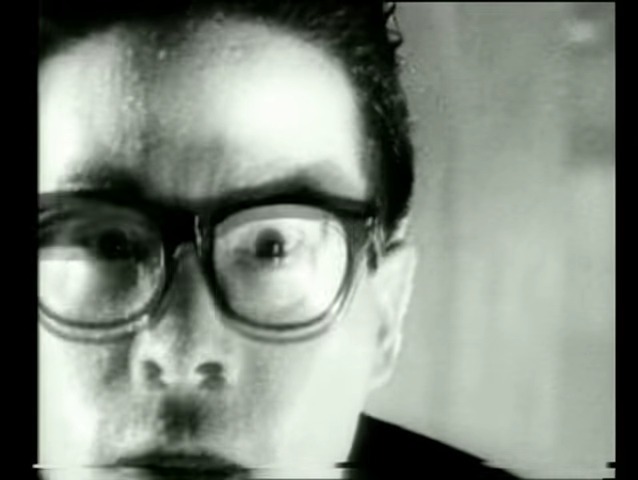
Kurosawa’s crime horror The Guard from Underground (地獄の警備員, Jigoku no Keibiin, 1992) was an early 90s insight into J-Horror’s ability to blend themes like crime and serial killers with horror concepts. Something which Kurosawa would become renowned for, along with directors like Takashi Miike.
The diverse and varied groundwork for J-horror was being laid for around a decade before it came to worldwide prominence and you were unlikely to even know it if you lived outside of Japan. 1997 marked the arrival of the J-Horror boom in earnest with the release of Kurosawa’s Cure.
90s & 2000s – The J-Horror Boom Was Here
Japan’s horror boom period spread all over the world. With movies like Ringu (1998), Cure (1997), Pulse (2001), Dark Water (2002), Ju-On: The Grudge (2002), Audition (1999), and Suicide Club (2001). leading the charge. Japan’s mastery of horror story-telling captivated the entire horror universe.
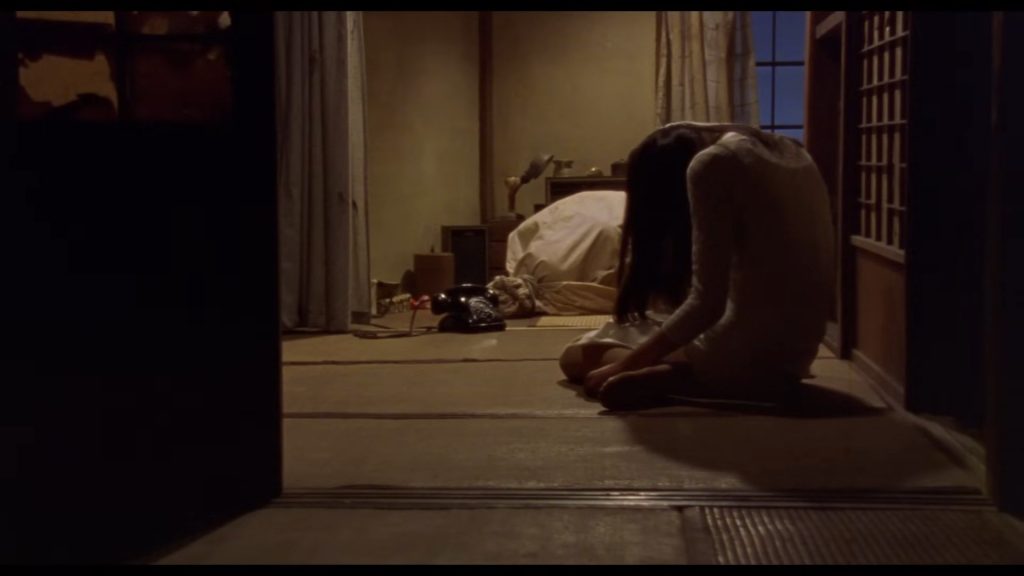
Whether it was ghost stories bringing vengeful spirits into the modern age or more human-centric psychological horror like Cold Fish (2010) and Confessions (2010), J-Horror had something for everyone. Many titles transcended the horror genre to gain massive mainstream popularity in entertainment as a whole.
I still, to this day, remember a ton of people I knew that had no interest in horror but fell in love with films like Ringu (1998) and Pulse (2001). Many of which still cite them as being among their all time favourite movies. My best friend still insists that Ju On: The Grudge is the scariest film he has ever watched. The list of releases was truly impressive.
- Cure (1997)
- Ringu (1998)
- Tomie (1998)
- The Spiral (1998)
- Audition (1999)
- Wild Zero (1999)
- Pulse (2001)
- Ichi: The Killer (2001)
- Visitor Q (2001)
- The Happiness of the Katakuris (2001)
- Suicide Club (2001)
- Dark Water (2002)
- Ju On: The Grudge (2002)
- One Missed Call (2003)
- Gozu (2003)
- Infection (2004)
- Premonition (2004)
- Marebito (2004)
- Strange Circus (2005)
- Reincarnation (2005)
- Noroi: The Curse (2005)
- Noriko’s Dinner Table (2005)
- Carved: The Slit-Mouthed Woman (2006)
- Retribution (2006)
- Kaidan (2007)
- Tokyo Gore Police (2008)
- Occult (2009)
- Confessions (2010)
- Coldfish (2010)
- Kotoko (2011)
- Helter Skelter (2012)
- The World of Kanako (2014)
- I Am a Hero (2015)
- Tag (2015)
- Sadako vs. Kayako (2016)
- One Cut of the Dead (2017)
Directors continued to experiment with new ways to take J-Horror to a different level. Koji Shirashi took on the found footage genre and managed to make one the most noteworthy FF movies of all time in Noroi: The Curse.
The 2000s – Transgressive Horror and Varied Themes
Takashi Miike’s transgressive film-making style brought together body-horror with splatter-horror and even crime thrillers. Ichi The Killer (2001) showed Miike’s desire to try something completely different with horror and this was followed by the equally shocking Gozu (2003). The mockumentary film Visitor Q (2001) further demonstrated his ability to terrify viewers in a multitude of different ways.
Despite the way many people think about J-Horror as being predominantly ghost stories. The genre was impossible to pin down to one theme or style. Many films focused on serial killers, others focused on the Yakuza, many addressed social anxieties that were very specific to Japan, and others took aim at the country’s extremely patriarchal society.
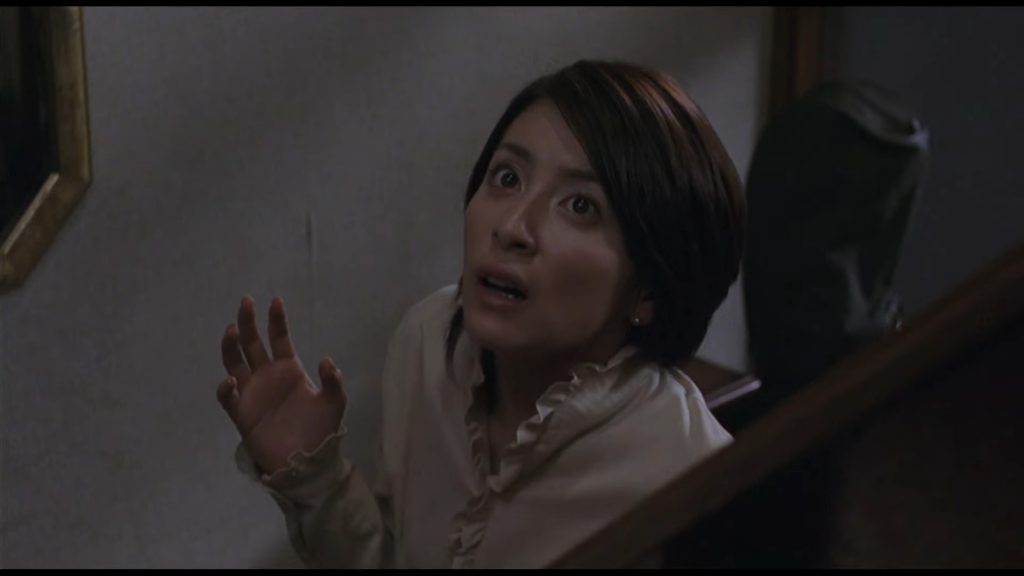
The Sushi Typhoon label emerged in the late 2000s to turn J-Horror on its head with some truly whacky movies. Tokyo Gore Police and Machine Girl kicked off a whole genre of exploitation-lite horror movies that were rife with violence and sexuality.
It’s almost impossible to understate how important, and significant, many of these movies are to modern horror cinema. Japan literally changed horror on a worldwide scale.
Whereas Italy’s Giallo movies are well regarded, they only enjoyed a cult following outside of their home country for a long time and limited worldwide appeal. Hammer Horror was popular worldwide but it didn’t change the face of horror. The same can be said for many of the world’s most popular horror eras and waves.
Japanese horror did change the world; Japanese horror changed the way we think of the entire genre to this day. Unfortunately, J-horror’s popularity would go on to be its downfall.
2010s – The Downfall of J-Horror
It would be impossible to paint a full picture of J-Horror’s significance without talking about its downfall. The boom period was so widespread that Hollywood, almost immediately, commissioned remakes of some of Japan’s greatest modern horror films. Some of these movies were well made, The Ring for example, while many were utterly awful.
The popularity of Japanese horror movies meant that a number of films made their way abroad unchecked. Quality faltered and titles that, perhaps, weren’t particularly well regarded in their home country still ended up on Western screens.
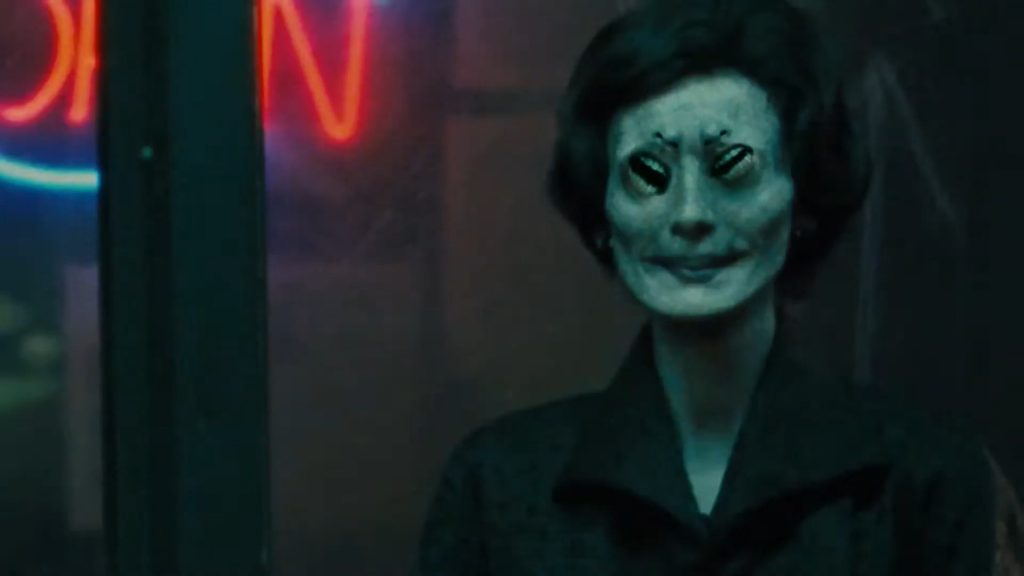
South Korean horror began to make its way to the west with titles like A Tale of Two Sisters and places like Thailand experienced miniature horror booms, as well. The similar themes in movies from these countries, likely inspired by J-Horror as well and sharing traditional Asian ghost stories, only further inflated the feeling of oversaturation.
The World Grew Tired of J-Horror
There suddenly developed an unmistakable air of fatigue with J-Horror. The once terrifying imagery suddenly felt tropey and derivative. How many times can you see a ghost with long black hair and still find it scary? Merciless parodies in movies like Scary Movie 3 only served as further reminders of the “trendiness” of the genre.
While J-Horror retained a high level of popularity well into the 2000s, people were growing tired of it. A fact which is something of a shame considering the late 2000s were home to some of the country’s greatest horror and thriller films.
I distinctly remember people’s frustration with how similar many of these movies felt to each other. Little realising that Japanese filmmakers were just catering to demand. Perhaps naively not realising the short attention spans of Western audiences.
The desire for distributors to provide films that fit the expected style of J-Horror lead to a feeling that Japanese horror was monolithic and resistant to change.
2010s – Post J-Horror Adaptation and Decline
The decline of J-Horror lead Japanese directors to return to making the types of movies that people in their home country would want to see.
Old favourites were revived, occasionally with tongue firmly planted in cheek like 2016’s Sadako Vs. Kayako which pits two of J-Horror’s most iconic spirits against each other.
Japan was ready to chuckle at its decade plus of success, and sudden decline, with no hard feelings. While many of J-Horror’s most prolific directors like Takashi Shimizu, Hideo Nakata, Koji Shirashi, and Kiyoshi Kurosawa, are still releasing new movies all the time. Their horror efforts attain far less popularity in the West.

Every now and then, Japan reminds the world of just how damn good it is at producing incredible horror movies. Kotoko (2011) is a shocking but wonderful example of Japan’s continued experimental and transgressive film-making. One Cut of the Dead (2017) is another brilliant genre blending film and one of the greatest zombie movies ever. I Am a Hero stands out, as well, as does 2015’s Tag.
There has been some focus on folklore stories like Takashi Shimizu’s Howling Village trilogy but their international appeal is questionable. The depiction of a black haired ghost is sure to inspire feelings of PTSD in people who still haven’t got over J-Horror’s early 2000’s dominance.
It could be argued that films like this are exactly what J-Horror doesn’t need and experimental horror would be more apt.
Modern Era – An Influence That Still Echoes
J-Horror’s influence still echoes to this day. Particularly where Hollywood horror film-making is concerned. Supernatural and paranormal horror movies from the USA are still overusing tropes that were defined by early 2000s Japanese films.
Its influence can be seen in practically every movie of this type released today. That’s without mentioning the country’s influence on its neighbours like Thailand, Taiwan, Hong Kong, South Korea, and Indonesia.
Japan was consistently putting out genuinely scary movies and they were doing this for well over a decade. It’s this resonance that earns Japan its number 2 place on this list.

Japan created a worldwide phenomenon without ever betraying what made it so distinctly Japanese. In return for its authenticity, the world watched and Western filmmakers imitated. While the West already had a niche interest in all things Japanese, J-Horror punctured the mainstream and put fuel on that fire.
J-Horror – The Future and Present
While Japan’s horror industry has faded, their horror auteurs are still releasing great movies. Kiyoshi Kurosawa’s Cloud (2024), the 45 minute long Chime (2024), and 2016’s Creepy all deserve mention.
Kôji Shiraishi is still very active, releasing a couple of movies seemingly every year (2024’s House of Sayuri is very good) and producing a lot of horror content for television.
Hideo Nakata still makes horror films though has struggled to recapture the glory of Ringu. Sion Sono was still producing horror for both the cinema and for television through the 2010s.
While Japan isn’t what it once was as a horror nation. Its influence on the world can’t be understated. The paradigm shifting J-Horror boom period is perhaps the most significant horror era of all time.
If it wasn’t for J-Horror’s popularity, every Hollywood horror movie would still be a jump scare fest or slasher. It’s this significance and genre revolutionising nature, along with a truly special horror history, that earns Japan its spot at number 2 on this list of the 10 Greatest Horror Movie Nations on Earth.
I bet you can guess who number 1 is? That’s coming up on Friday.
You can take a look at all of our Japanese Horror content by clicking this link.
- Consistency: Sporadic but often significant up until the late 90s when things really took off.
- Historical Impact: Japan’s Kaiju monster movies were hugely special and they released some of the best horror movies ever in the 60s and 80s. Late 90s to 2000s were among the greatest horror eras ever.
- Current Impact: Late 90s to 2010s impact is still resonating and changed horror forever but Japan’s current horror industry is far less noteworthy in the West.
- Impact Above Expected: Japan has a huge entertainment industry and a large, rich, population but still incredibly impressive. Especially when considering that they aren’t part of the anglosphere and never betrayed their cultural identity to appeal to the rest of the world.