10 Horror Movies with Powerful Metaphors – Monsters in our Mirrors
Welcome to Ranking Horror. Today we are covering a brand new topic – 10 Horror Movies with Powerful Metaphors – Monsters in our Mirrors.
Table of Contents
Some of the most hard-hitting and memorable horror movies aren’t just about jump scares or terrifying creatures; they are about us and our own personal insecurities and shortcomings. They tap into our deepest anxieties and fears, dressing them up as ghosts, monsters, and demons.
To make this easier to navigate, we’ve ranked these essentials based on how effectively they bridge the gap between supernatural scares and human reality.
| Rank | Movie Title (Year) | The Metaphor |
|---|---|---|
| 1 | Get Out (2017) | Systemic Racism & Marginalisation |
| 2 | The Babadook (2014) | Unresolved Grief & Depression |
| 3 | Hereditary (2018) | Generational Trauma & Fate |
| 4 | Possession (1981) | The Violent Rupture of Divorce |
| 5 | Under the Skin (2013) | Objectification & The Human Experience |
10. Saint Maud (2019) – Ecstasy as an Exit from Reality
- Director: Rose Glass
- Cast: Morfydd Clark, Jennifer Ehle, Lily Knight
- Runtime: 84 minutes
- IMDb: 6.7/10
The Metaphor (Why It Works): I absolutely had to feature Saint Maud on this list. It is both troubling and entirely compelling, despite the somewhat subtle horror aspects. A brilliant debut from Rose Glass, Saint Maud is a devastating look at the intersection of religious fanaticism, loneliness, and severe mental illness. Maud’s ecstatic visions are manifestations of her profound psychological trauma and desperate need for purpose.
The film serves as a powerful metaphor for how faith, when warped by isolation, can become a destructive force. Glass herself has confirmed the film is an examination of a mental breakdown, making those final scenes even more tragic.
Synopsis: The story follows a pious and deeply disturbed young nurse working in palliative care who becomes dangerously obsessed with saving the soul of her terminally ill patient, a former dancer who represents the “hedonism” Maud has rejected.
Where to Watch: MGM+, Amazon Prime Video
9. Midsommar (2019) – The Brutal Catharsis of a Breakup
- Director: Ari Aster
- Cast: Florence Pugh, Jack Reynor, Will Poulter
- Runtime: 148 minutes
- IMDb: 7.1/10
The Metaphor (Why It Works): This sun-drenched folk horror is a twisted tale about the catharsis of escaping a toxic relationship. While the rituals are horrific, the story is actually a potent metaphor for Dani’s emotional journey. Her profound grief and needs are consistently manipulated by her gaslighting boyfriend.
The cult’s communal embrace of pain serves as a brutal but validating release for her. Midsommar isn’t just about a Swedish holiday; it’s an allegory for finally breaking the chains of a relationship that has already died.
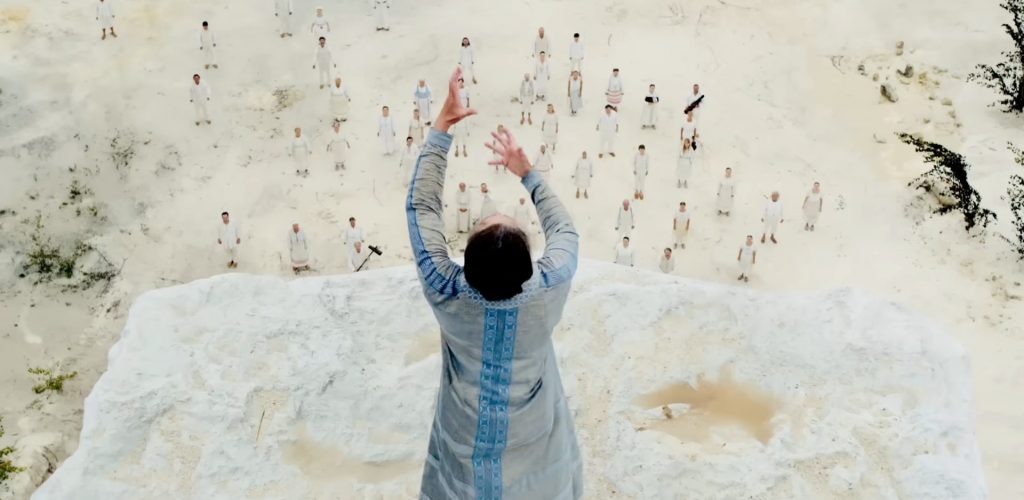
Synopsis: A group of friends travels to a remote Swedish commune for their midsummer festival, only to be trapped in the violent and bizarre rituals of a pagan cult that values community over individual survival.
Where to Watch: Max, Kanopy
8. Invasion of the Body Snatchers (1956) – Loss of Identity in the Collective
- Director: Don Siegel
- Cast: Kevin McCarthy, Dana Wynter, Larry Gates
- Runtime: 80 minutes
- IMDb: 7.7/10
The Metaphor (Why It Works): This is an absolute classic of Cold War paranoia. Invasion of the Body Snatchers is a potent allegory for McCarthyism and the ever present 50s fear of encroaching communism. Imagine having the supposed threat of communism being pounded into your ears all day on the news and television. Only for this movie to come along and turn it into an actual visceral display of horror.
It preys on the anxiety of losing one’s individuality to a mindless, conformist, collective. The horror lies in not being able to trust your neighbours or friends, who may look the same but have become soulless automatons. This was a very real threat to people back then and goes some way to explaining how scary people found this film on release.
Synopsis: A small-town doctor in California discovers that the local population is being replaced by emotionless alien duplicates, grown from giant seed pods, who intend to erase all human emotion and conflict by replacing the race.
Where to Watch: Amazon (Rent/Buy), Apple TV (Rent/Buy)
7. The Ritual (2017) – The Weight of Survivor’s Guilt
- Director: David Bruckner
- Cast: Rafe Spall, Arsher Ali, Robert James-Collier
- Runtime: 94 minutes
- IMDb: 6.3/10
The Metaphor (Why It Works): This British folk horror is a fantastic metaphor for survivor’s guilt and unresolved trauma. Obviously, The Ritual is not the most subtle of allegorical stories as you are kind of beaten around the head with it early on but the way it plays out blends perfectly with some legitimately great horror.
The creature here acts as a physical manifestation of the group’s inner demons, forcing them to relive their worst moments in the hopes of survival. For the main character, it represents his profound guilt over abandoning his friend during a violent robbery and leaving him to die. To survive, he must finally confront and fight back against the monster that is his own shame.
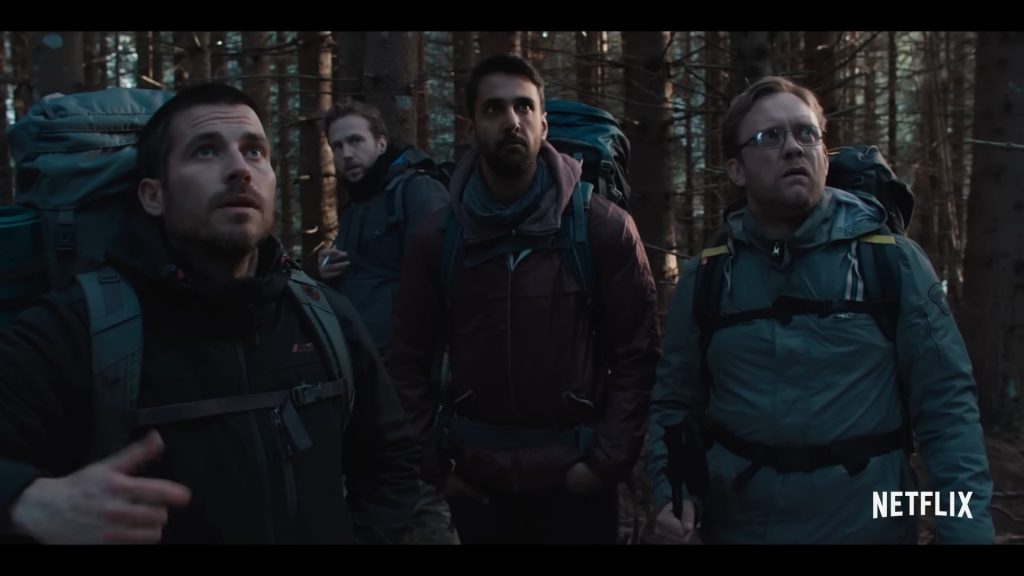
Synopsis: Four friends hiking in the Swedish wilderness to honour a deceased friend get lost and find themselves stalked by an ancient, terrifying evil that forces them to relive their worst memories.
Where to Watch: Netflix
6. Us (2019) – The Tethered Truth of Privilege
- Director: Jordan Peele
- Cast: Lupita Nyong’o, Winston Duke, Elisabeth Moss
- Runtime: 116 minutes
- IMDb: 6.8/10
The Metaphor (Why It Works): Us is a complex allegory about social inequality, the hidden and undesirable aspects of society, and the dark side of the American dream. The “Tethered” represent the forgotten, oppressed underclass forced to live in the shadows, whose suffering is supposedly necessary for the comfort of the privileged above.
The film argues that we are our own worst enemy and that society’s stability is built on a foundation of unseen pain. Let’s be honest, as well, Peele hit the nail on the head there. Just a walk to the other side of the tracks will reveal that opulence and fortune is built off the backs of those unlucky enough to not be privileged.
Synopsis: A family’s serene holiday turns to chaos when they are attacked by a group of doppelgängers who appear to be identical to themselves, leading to a nationwide uprising of the people from the shadows.
Where to Watch: Amazon (Rent/Buy), Apple TV (Rent/Buy)
5. Under the Skin (2013) – Dismantling the Male Gaze
- Director: Jonathan Glazer
- Cast: Scarlett Johansson, Jeremy McWilliams
- Runtime: 108 minutes
- IMDb: 6.3/10
The Metaphor (Why It Works): Under The Skin might have received more notice for the prolonged scenes of Scarlett Johansson walking around completely naked than it did for being a fantastic indie horror movie which is something of a shame. This mesmerising and rather unsettling film is actually a powerful allegory for identity, objectification, and what it means to be human.
By placing an alien in the form of a desirable woman, the film dissects and inverts the toxic male gaze and manages to subvert the expectations of what might happen to our main character. Under the Skin works as a haunting exploration of loneliness and the isolating experience of being an outsider looking in. Johansson’s character learns all about humanity from its most predatory and vulnerable moments. Not the best look to give to an alien being but an unfortunately accurate one.
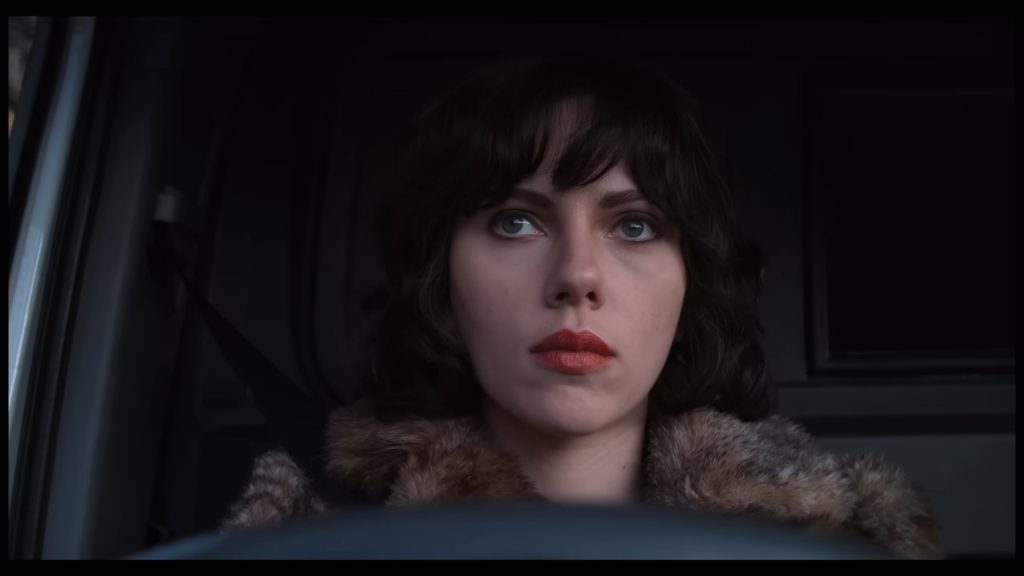
Synopsis: An otherworldly, shapeshifting being drives around Scotland in a van, using her appearance to lure men to a dark, abstract fate, only to begin developing a troubling sense of self-awareness.
Where to Watch: Max, Kanopy
4. Possession (1981) – The Monstrous Anatomy of Separation
- Director: Andrzej Żuławski
- Cast: Isabelle Adjani, Sam Neill
- Runtime: 124 minutes
- IMDb: 7.3/10
The Metaphor (Why It Works): Did you think that disturbing relationships with tentacle baring creatures was an anime and manga trope first? Well, you would be wrong. Allow me to introduce you to Possession. This is a notoriously intense and kinda surreal film that serves as a monstrous and gut wrenching allegory for the ugliest aspects of a painful divorce.
The horror here is a physical manifestation of the new life, relationship, and identity born from the death of the couple’s marriage. The film’s hysteria, violence, and fantastic body horror externalise the internal agony of betrayal and separation. Go and watching this film if you haven’t and then read the experiences of the actors working on it. It is absolutely fascinating stuff.
Synopsis: A spy returns home to West Berlin to find his wife wants a divorce. Her behaviour becomes increasingly erratic and violent, leading to the discovery of a horrifying, tentacled secret she is hiding in an abandoned apartment.
Where to Watch: Shudder, AMC+, Metrograph
3. Hereditary (2018) – The Curse of the Family Tree
- Director: Ari Aster
- Cast: Toni Collette, Alex Wolff, Milly Shapiro
- Runtime: 127 minutes
- IMDb: 7.3/10
The Metaphor (Why It Works): Perhaps one of the most well regarded horror films of the past decade, it is impossible not to include it on this list. There’s a lot of actual horror and actual scary stuff going on in Hereditary that blurs the more subtle nuance of the story just a little. Despite the things we see see happening, the film’s core is actually a metaphor for generational trauma.
The horror here is inherited, passed down like a genetic disease. Each character is a puppet to their own unresolved pain and the toxic legacy left to them from the people that came before. Making the supernatural element a chilling extension of the psychological horror they are destined to inherit from each other.
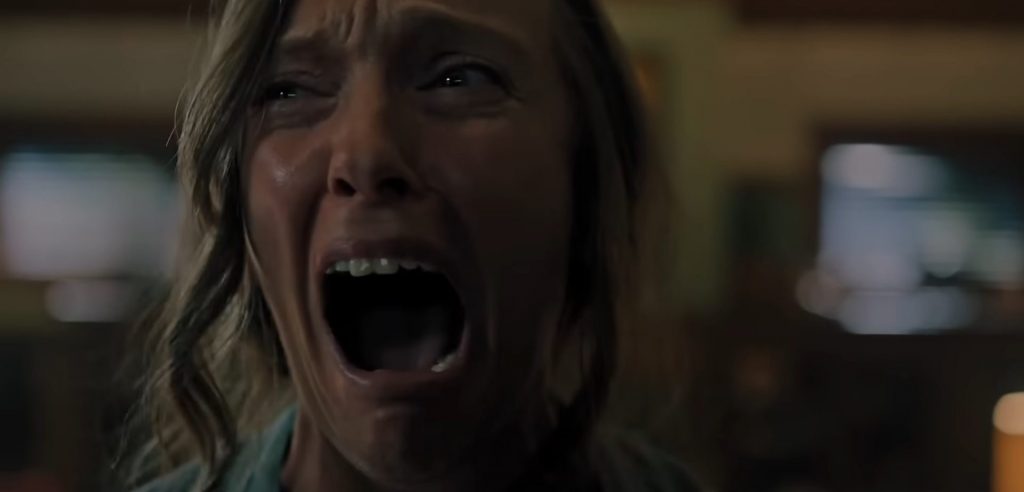
Synopsis: After the family matriarch passes away, her daughter’s family begins to unravel as they are haunted by tragic and disturbing occurrences that reveal a dark, occult history tied to their lineage.
Where to Watch: Max, Kanopy
2. The Babadook (2014) – Feeding the Grief
- Director: Jennifer Kent
- Cast: Essie Davis, Noah Wiseman
- Runtime: 93 minutes
- IMDb: 6.8/10
The Metaphor (Why It Works): Anyone else feel like this is the movie responsible for the massive wave of metaphorical horror movies released in recent years? The Babadook is an extremely effective portrayal of unresolved grief and depression. It does have a lot to answer for when it comes to annoying copy-cat movies, though.
The monster here is not actually an external entity but a manifestation of the mother’s overwhelming grief and depression. You can’t get rid of the Babadook, just as you can’t eliminate sorrow; you can only learn to acknowledge it and live with it, locking it away in the “basement” of your consciousness. It’s impossible not to sympathise with the mother here, especially when that kid screams at the top of his voice. That’s legitimately ear splitting.
Synopsis: A widowed mother and her troubled son are tormented by a sinister storybook character, Mister Babadook, who begins to manifest in their home, threatening to consume them both.
Where to Watch: Hulu, AMC+, Shudder
1. Get Out (2017) – The Horror of Liberal Perfidy
- Director: Jordan Peele
- Cast: Daniel Kaluuya, Allison Williams, Bradley Whitford
- Runtime: 104 minutes
- IMDb: 7.8/10
The Metaphor (Why It Works): Jordan Peele’s Get Out has proved to be a bit of a modern masterpiece when it comes to horror. It’s compelling, funny, and, in parts, legitimately scary. It’s also a biting allegory for systemic racism in “progressive” America.
The story reflects the real life experiences of black Americans when it comes to supposedly liberal whites whose acceptance comes with a sting in the tail. The “Sunken Place” isn’t just science fiction concept; it’s a visual metaphor for the silencing of Black voices in white dominated spaces. The horror is rooted in the real world anxieties of cultural appropriation, microaggressions, and the fetishisation of Black bodies.
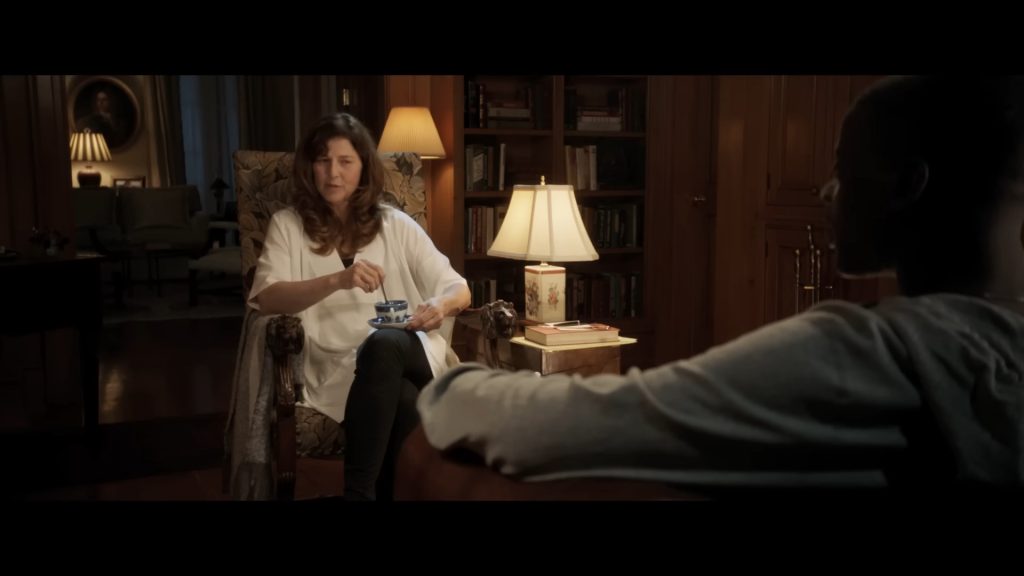
Synopsis: A young Black man visits his white girlfriend’s parents for a weekend getaway. While they seem welcoming and liberal, he slowly uncovers a horrifying plot to harvest the physical attributes of Black individuals for the benefit of a wealthy, aging white elite.
Where to Watch: Amazon (Rent/Buy), Apple TV (Rent/Buy)
More Than Just a Monster
There you have it – 10 films that prove horror is often the best genre for holding up a mirror to society and our own internal struggles. Whether it’s the cold war panic of the 50s or the systemic cultural anxieties of today, these films stick with us because they tap into truths we often try to ignore.
If you haven’t seen these yet, you’re missing out on some of the smartest storytelling in cinema. A great follow up to this list is our list of 10 Psychological Horror Movies from the 2020s You Need to See. Stay scary, and I’ll be back soon with another ranking.
Quick Picks: Allegorical Frights by “Vibe”
If you’re in a rush to find a monster that mirrors your own internal mess, here is the “Best of” breakdown from our list:
- 🏆 The Masterpiece of Subtext: Get Out (2017) – The definitive look at how societal structures are scarier than any ghost.
- 😢 The Grief Counselor’s Nightmare: The Babadook (2014) or The Ritual (2017) – For when you want to see your unresolved sorrow manifested as a tall man in a hat or a forest god.
- 👨👩👧👦 The Generational Trauma Trap: Hereditary (2018) – The ultimate proof that you can’t outrun your family tree, no matter how hard you try.
- 💔 The Toxic Relationship Exit: Midsommar (2019) or Possession (1981) – Whether it’s a sun-drenched breakup or a tentacled divorce, these are for the broken-hearted.
- 🌀 The Best Mind-Bender: Saint Maud (2019) or Under the Skin (2013) – For those who want their horror served with a side of existential crisis and identity loss.